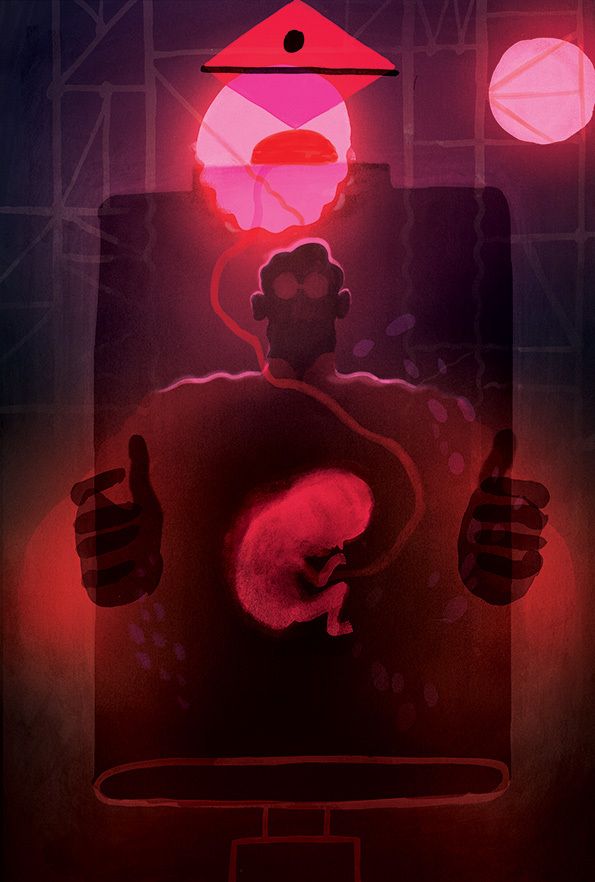
i heard a lot of things about this book before we read it in the book club. i mean, i used it’s title to get someone to join. i watched a youtube video about anti-intellectualism that cited it often. i’ve seen the twitter posts, the tiktok rants, the reddit vent. i’ve seen the constant comparison to 1984. two people in this very club told me it was one of the best books they’d read.
suffice to say, i was primed to read brave new world. i was a soon to be eaten pig. marinated for a full day, slow roasted over a fire, stuffed to the brim with seasoning and vegetables and whatever else you add when you cook a pig whole (i don’t eat pig).
looking back i can’t help but wonder, was this my doom? the hearsay, the praise, the unadulterated infatuation that sweetly flowed through my ears before i’d even read a single word of the world state, before i even knew what the world state was?
if you read my animal farm review, you saw me wrestle with the dark art of rating fiction. Spoiler: I still haven’t cracked the code. it’s hard to say, and i think it changes for me with each work i rate. i don’t know how to quantify the way i rated brave new world. all that i know is that i absolutely loathed this story.
i honestly think that brave new world and animal farm are similar in a sense that most of the allure of the two works are the theme and nothing else. there are no truly compelling characters, worldbuilding, plot, or prose within either stories. for animal farm this is by design. for brave new world….well, i hope it’s by design…
i am going to try to succinctly explain my feelings regarding this book to you, however, it will most likely be overly long like all of my other reviews. i apologize for this.
ok, welp. where to start.
brave new world is…a very…hmm how to put this…weird novel…
this isn’t necessarily a bad thing. i like weird. weird can be fun, weird can be interesting. weird can say a lot of things.
but its weird in a sort of performative way.
the work starts with a lengthy explanation of the world state’s reproductive processes, caste system, and conditioning/indoctrination system. following this, it doesn’t do much with it. sure, in some chapters a character might say something really…weird, foreign, alien. it might throw at the reader some super odd cultural practice, like the orgy porgy or the soma addictions. but other than that, most of the “cultural” practices of the world state, the way in which it works/runs, and the way it affects the people living within the world state, are set dressing to an entirely different story. For a society built on pleasure engineering, the book shows surprisingly little of either the pleasure or the engineering.
Because what Brave New World actually is, underneath all the dystopian worldbuilding, is a very familiar story archetype – the ‘noble savage’ or ‘fish out of water’ narrative. Strip away the soma and the conditioning and the World State, and John’s story becomes: sheltered person with rigid moral convictions enters modern society, is horrified by its decadence, tries to maintain his purity, and meets a tragic end because he can’t adapt.
I HATE JOHN!!!! (as a concept…)
In his 1949 letter to George Orwell, Huxley revealed exactly what story he was trying to tell. He wrote that “the ruling oligarchy will find less arduous and wasteful ways of governing and of satisfying its lust for power, and these ways will resemble those which I described in Brave New World” specifically through “infant conditioning and narco-hypnosis” that would make “people into loving their servitude.” by this letter, huxley didn’t seem to be interested in John’s individual journey at all. He wanted to write a satirical social commentary about a society that traded meaning for comfort, a world-building exercise that would expose the absurdities of technological control through conditioning and manipulation.
But instead of staying with that vision, Huxley seemed to panic and threw in John as a more conventional dramatic focal point. someone who could tell us why this world is bad rather than showing us through the psychology of people actually living within the system. The problem is, once you introduce the outsider character, all that elaborate worldbuilding becomes mere decor for his story. The soma, the conditioning, the caste system… none of it matters anymore because we’re not experiencing it from the inside. We’re just watching John react to it. John’s arc is so dominant it turns the rest of the dystopia into expensive set dressing. Every time the narrative threatens to explore how the World State actually works, its politics, its economics, its day‑to‑day human cost, we jump back to John’s latest bout of moral nausea.
So the satirical social commentary that should have been the meat of the book becomes background, and the meaningful critique Huxley actually wanted to make gets buried under a much more generic ‘corruption of innocence’ narrative. The book ends up saying nothing meaningful about either story it’s trying to tell. (more on this later).
The Fundamental Premise Problem
The frustrating thing is, I spent the first twelve chapters trying to take this book seriously as the dystopian masterpiece everyone told me it was. I was looking for profound insights about technology and control, waiting for the devastating critique of modern society. But around chapter 12, I finally gave up and started reading it as the weird, over-the-top satire it actually is, and suddenly I was having fun! The orgy-porgy, the bizarre cultural practices, the absurd dialogue, it all worked much better as dark comedy than as serious social commentary. Then chapter 18 hit and I realized the book actually did take itself seriously, and it all fell apart again.
most of the characters we actually get inside the heads of are miserable. Bernard is constantly anxious and insecure. Helmholtz feels creatively stifled. Even Lenina seems vaguely dissatisfied and confused. If this system is supposed to create universal happiness through conditioning, why are all our point-of-view characters unhappy? Either the conditioning doesn’t work, or Huxley couldn’t resist giving his characters just enough consciousness to drive the plot, which completely undermines his own premise.
and to be clear, I don’t think it’s bad that they’re miserable. honestly, that part makes sense to me. in a world built on cognitive sabotage and emotional anaesthesia, it would be weirder if everyone were genuinely content. the problem isn’t “oh no, the characters aren’t happy enough,” it’s that their unhappiness completely cuts against both Huxley’s own “people loving their servitude” sales pitch and the popular reading that treats this book as a warning about people choosing comfort over truth. nobody here is choosing anything. nobody here actually “loves” their servitude. they literally can’t do anything else other than what they do, and they’re quietly miserable about it. what we see on the inside is alienation and numbness, which lines up way more with a foucauldian, productive-power reading than with any meaningful idea of “pleasure-based control.” Power in this story shapes bodies, brains, and desires so thoroughly that choice is pre-scripted; the result is not happiness, but an anaesthetized, hollow subjectivity. at that point, the supposed difference between this and 1984 starts to feel more like a costume change than a real distinction.
And this connects to what might be the book’s biggest conceptual failure– Mustapha Mond’s motivations make no sense in the context of Huxley’s stated critique. In his letter to Orwell, Huxley talks about rulers satisfying their ‘lust for power’ through conditioning Yet Mond, the novel’s chief spokesman for the regime, is not driven by personal ambition at all. He is introduced as a man who lived through the Nine Years’ War and the worldwide economic collapse that followed, events that nearly destroyed humanity. Faced with that memory, he explains, “World Control was the only alternative to misery and chaos.” He even gave up his real passion (experimental physics) because World Controllers are barred from independent research. As he tells the dissident Helmholtz Watson: “I was on the point of being sent to an island of physicists myself. Instead, I accepted this post.”
he’s a benevolent dictator who has sacrificed his own happiness for the greater good, not a power hungry tyrant. what does he get out of all of this? He literally receives almost nothing in return. no private palaces, no family, no chance to pursue the physics he loves, not even a cult of personality. Real‑world dictators, from Napoleon to Stalin, always translate absolute control into luxury, propaganda portraits, or personal indulgence; Mond just shuffles paperwork, which makes Huxley’s “lust for power” theory ring hollow. His job is endless maintenance, not personal gain.
also, When people don’t fit in, he doesn’t brutalize them. he sends them to islands where they can be happy their own way. This isibasically socialism with extra steps (if you completely forget about the lower castes, as huxley seemed to during most of the duration of this novel). His guiding maxim, “Truth’s a menace; science is a public danger” comes across less as tyranny for its own sake and more as a grim calculation meant to prevent another catastrophe. In short, Mond presents himself as a reluctant steward who restricts knowledge and art only to preserve collective stability.
This portrayal softens the book’s dystopian edge. A ruler who sacrifices his own happiness, spares his critics, and genuinely believes he is preventing a return to war does not fit the power‑hungry oligarchy Huxley later described to Orwell. The only place where Mond’s benevolence truly breaks down is toward the lower castes (Gammas, Deltas, and Epsilons) whose lives are shaped by forced cognitive impairment. But because the narrative rarely shows their perspective, that moral cost stays off‑stage, and the World State ends up looking more humane than menacing. The critique collapses because Huxley accidentally made his dystopia too humane.
(To be clear: I’m not saying the World State is actually good or that we should want to live there. it’s still inhumane. incredibly inhumane and messed up. and of course personal motive doesn’t negate structural outcome. Mond can be ascetic while still perpetuating a caste system that is completely hellish to live in and morally wrong. i’m just saying huxley didn’t write what he said he wrote.)
furthermore, the Gammas, Deltas, and Epsilons (the people whose lives are actually being destroyed by this system) are barely even characters. These are the people who’ve been deliberately brain-damaged, condemned to menial labor, and stripped of any possibility for intellectual or emotional growth. If you want to write a serious indictment of a society that engineers people into castes, shouldn’t we spend time with the victims of that engineering?
But no, we get Bernard’s petty anxieties about his height and Helmholtz’s creative frustrations. problems that would barely register compared to being systematically lobotomized for the convenience of the state. The real horror of the World State shouldn’t be that Alphas sometimes feel unfulfilled; it should be that entire classes of people have been turned into barely-human drones. Yet Huxley treats them more like chess pieces than actual people whose suffering we should care about.
This is exactly the kind of story that needed to stay focused on the World State itself. Imagine following a Gamma or Delta character struggling with the cognitive dissonance of their conditioning, or an Alpha slowly realizing the true cost of their comfortable position. But instead we get John’s Shakespeare-quoting moral outrage, which completely sidesteps the actual systemic violence at the heart of this society. The book claims to be a critique of dehumanization while barely treating its most dehumanized characters as human.
The Economic System That Makes No Sense
Speaking of things Huxley didn’t think through…what economic system is the World State even supposed to be? The consumption mandates and throwaway culture scream hyper-capitalism, but citizens live in a completely communist system with no private property, assigned jobs, collective housing, and state-controlled distribution.
Huxley wanted to critique both runaway capitalism and totalitarian socialism simultaneously, but just mashed together the scariest elements of both without thinking about how they’d actually work together. It’s yet another example of the book grabbing whatever sounds dystopian without developing a coherent critique of anything.
The Myth of Modern Relevance- themes in bnw
This brings me to what might be the most frustrating aspect of how this book is received today. it’s something I originally included an in-depth analysis of in this review before deciding it deserved its own separate essay.
Everyone thinks they know what Brave New World is about. Open social media and you’ll find people comparing our world to Huxley’s. we’re supposedly drowning in digital soma, trading critical thinking for entertainment, becoming willing participants in our own intellectual decline. The book has become shorthand for a society that chooses pleasure over truth.
but that’s not the story Huxley wrote. The citizens of the World State aren’t making choices at all. The majority have have been systematically handicapped (as i’ve stated multiple times before. they literally cannot engage in critical thought). The upper castes follow conditioning so complete that what looks like “choice” is really just programmed response. Nobody in this society is selecting comfort over resistance because the capacity for resistance has been engineered out of them.
What Huxley actually created, what’s been buried under all the noble savage melodrama, is a much more sophisticated critique about ontological capture. The World State doesn’t just control what people do; it controls what they can want, think, or even imagine. This is power operating productively rather than repressively. it manufactures willing subjects by engineering the very categories through which they understand reality. The horror is the erasure of interiority before it can form. The system doesn’t need to force compliance because it has shaped the framework through which people understand choice, resistance, and compliance itself.
When we misread the novel as being about voluntary servitude, we’re practicing exactly what the book describes: mistaking the products of systematic conditioning for natural human tendencies. I spent pages unpacking this cultural phenomenon and its implications here.
last thing on themes — development
i don’t have an issue with this theme. it is an incredibly insightful theme. my problem is that none of the themes Huxley set up with the World State are actually well explored in the book because the story never gives the World State itself any relevance or focus. We get that elaborate opening explanation of the caste system and conditioning processes, and then the book immediately abandons any serious exploration of how these systems actually function or affect people’s lives. The World State becomes background for John’s outsider story, which means that any themes that could have emerged from examining that society (regardless of what those themes might have been) never get the narrative attention they need to be properly developed.
For a book supposedly about how ‘infant conditioning and narco-hypnosis’ create compliant citizens, we spend remarkably little time seeing this conditioning in action or understanding how it works psychologically. We get that one scene in the nursery with the books and flowers, and then… what? The rest is just characters telling us about their society rather than us experiencing the subtle horror of it from within. Instead of showing us how the conditioning actually works, how it shapes desire and identity from the inside, how people navigate the contradictions within the system, we get a morality play about pure versus corrupt values. The most interesting critique gets buried under the least interesting possible execution.
If you want to show how a society conditions people into ‘loving their servitude,’ you need to demonstrate the insidious ways that conditioning shapes thought, desire, and identity. Instead, Huxley just gives us a bunch of weird cultural practices and expects us to be horrified by them without ever showing us why they’re actually effective or meaningful to the people living under them. The only place you really see that theme well-built is in Huxley’s letter to Orwell, not in his novel itself.
The book that people think they’re praising doesn’t actually exist. it’s a collective hallucination based on a premise that Huxley stated but never actually executed.
This is the book’s greatest tragedy. it had the bones of a genuinely profound analysis of how power operates in modern societies and completely wasted it on a “noble savage meets decadent civilization” narrative that tells us nothing useful about either power or resistance.
How John Ruins Everything: The Narrative Hijacking Problem
John’s presence makes these themes impossible to explore properly. Every interesting question the book could have explored gets derailed by John’s moral outrage. How does conditioning actually shape identity and desire? We’ll never know because we’re too busy watching John be horrified by orgy-porgy. What psychological mechanisms keep people compliant? Doesn’t matter because John is there to tell us the system is bad. How do people within the system navigate contradictions and dissatisfactions? Who cares when we can watch John quote Shakespeare at everyone.
The “anti-intellectual choice” theme fails because we never see anyone actually making anti-intellectual choices. all we see is John reacting to a society he doesn’t understand. The systemic conditioning theme fails because we never experience conditioning from the inside. all we see is John pointing out that it exists. Even if Huxley had some completely different theme in mind, it would have failed too, because John’s outsider perspective turns everything into performative window dressing for his fish-out-of-water story.
This is why the book feels so narratively incoherent. Huxley set up this elaborate dystopian world with complex social mechanisms, and then immediately introduced a character whose entire function is to stand outside that world and explain why it’s wrong. It’s like building an intricate puzzle and then smashing it with a hammer instead of trying to solve it. Every time the story threatens to dig deeper into how the World State actually works, John shows up to have another moral crisis about it.
without John, we could have had a genuinely interesting exploration of whatever theme Huxley was actually going for. We could have followed Bernard, Helmholtz, and Lenina as they navigate their doubts and dissatisfactions from within the system. We could have seen how conditioning works, how it fails, how people push against it or get crushed by it. We could have experienced the seductive appeal of a painless existence or the horror of systematic dehumanization or the construction of reality itself. The themes Huxley claimed he wanted to explore (about technology, control, the trade-offs between comfort and meaning) could have actually played out through characters who are products of this world.
But instead, every potential theme gets reduced to John pointing and saying “this is bad!” The book doesn’t fail because its themes are bad. it fails because John makes it impossible to develop any themes at all.
John’s story just isn’t that story. Once he shows up, it becomes a fish-out-of-water narrative about culture clash and moral purity. The focus shifts from ‘how does this society function and what does it do to people?’ to ‘look how shocked this outsider is by our weird customs!’ Instead of exploring the psychology of people who have been conditioned to love their servitude, we get a straightforward morality play where the unconditioned person explains why conditioning is bad.
The Alpha Problem
Huxley’s focus on Alpha problems fundamentally undermines his own theory about how the World State operates. If you’re going to write a critique of a caste system that systematically destroys human potential, shouldn’t at least some of the people we follow be the people who are actually being destroyed? Instead, we get Bernard whining about being too short and Helmholtz feeling creatively stifled. These are the problems of the privileged class in a society built on literal brain damage, and we’re supposed to care about their existential angst? i’m not saying he can’t include alpha pov characters at all, but at least one lower caste character, maybe? someone who has to live with the consequences of the bokanovsky process from the inside instead of just being pointed at as “evidence” of how bad things are for other people.
It’s like writing a critique of slavery and focusing on how the plantation owners sometimes feel empty inside (this is actually an interesting comparison seeing as how huxley made all of the non white races the lower castes lol). the world state is horrific for alphas, sure, but incredibly horrifying to the Gammas, Deltas, and Epsilons. they are the ones whose embryos are pickled in alcohol, whose neural development is deliberately sabotaged, whose entire cognitive range is clipped down to “just enough to push this button forever.” and yet, once Huxley finishes describing how they’re manufactured, he loses all interest in them as people. they show up as crowds, as mobs, as a blur of identical uniforms. we never get a single moment of interiority from the very group that pays the highest price.
Huxley treats them as background props while we explore the inner lives of the people who benefit from their exploitation. he wrote a fantasy about elite discontent, not a dystopia that speaks to the real world. It’s dehumanization by omission: the very people whose minds and bodies are most violently rearranged by the system are the ones who never get to be subjects of the story, only scenery and crowd control. the only time the lower castes really “matter” on the page is when they’re needed as a threatening mass (the soma riot, the elevator scene) so the plot can move or an Alpha can have a reaction. that’s reproducing the exact gaze the World State itself has: they’re “there,” but not as fully human.
and this lands differently when you remember who he shoves into those castes. the book racializes the underclass, non-white bodies compressed into Gammas, Deltas, Epsilons—then refuses them interiority. so the hierarchy isn’t just cognitive, it’s racial. Huxley imagines a future in which Black and brown people are literally engineered into servitude…and then decides their inner lives are not artistically interesting enough to depict. more than just a missed opportunity; that is a tell.
and what makes it worse is that this isn’t just a neutral craft choice, it actively distorts the theme. a book that only lets us inhabit the unease of the relatively privileged starts to look like it’s saying “the real tragedy of systemic violence is that it makes the elite feel spiritually empty.” it turns structural brutality into a backdrop for upper-class vibes. instead of asking “what does it mean to have your mind broken for someone else’s comfort?” the novel asks “how sad is it to be a slightly alienated manager in a world built on broken minds?”
And for a reader who’s not part of that top 10–20%…i mean…it sends a weird message. It says: Your suffering is not the subject of literature. Your exploitation is just the setting. if you would be a gamma, delta, or epsilon in this world (and most of us would), the novel quietly informs you that your interiority doesn’t matter enough to be imagined. we’re supposed to identify with the managers and technicians and controllers, feel moved by their dissatisfaction, and accept the permanently damaged underclass as a kind of moral wallpaper. for a book that’s supposedly about dehumanization, that’s a pretty bleak look at who huxley considered fully human, and the way modern readers ignore those castes in their interpretations just repeats that erasure all over again.
Even within the Alpha class, the focus is completely backwards. Bernard and Helmholtz are dissatisfied precisely because they’re the ones who escaped full conditioning. they’re the exceptions that prove the rule. If Huxley wanted to show how the system actually works, he could have followed at least one Alpha who genuinely loves their life in the World State, who’s been successfully conditioned into perfect compliance. Show us someone who’s been turned into exactly what the system wants them to be, and then slowly reveal the horror of that transformation.
But instead, each character we get are ones who are already half-awake, already questioning things, already primed for rebellion.
I want to be clear about my critique here. I’m not arguing that Huxley should have written a completely different book to meet some external standard. I’m pointing out that the society he actually created contradicts his own stated vision. When Huxley told Orwell he was writing about a society that makes people “love their servitude” through conditioning and pleasure rather than fear and brutality, he was describing his own artistic goals. But the World State he built only offers that seductive experience to a small elite, while systematically destroying the minds of everyone else. and that seduction quite literally fails on each of the “small elite” characters we actually get inside the head of. Huxley’s execution undermines his own framework.
Chapter 18: The Pretentious Meltdown
And then there’s Chapter 18, which made me realize just how self-indulgent and pretentious this whole enterprise really is. John’s final breakdown reveals the book’s fundamental narcissism. it’s less interested in exploring systemic oppression than in staging a dramatic confrontation between “pure” and “corrupt” values. The ending becomes this overwrought tragedy about the impossibility of maintaining moral purity in a fallen world, which is exactly the kind of simplistic morality play that undercuts any sophisticated social critique.
The whole sequence feels like literary masturbation. Huxley jerking himself off about how profound and tragic his noble savage is, how pure and uncorrupted he is compared to the decadent masses. John’s suicide is a pretentious statement about the impossibility of authenticity in modern society. It’s the Daenerys-as-Mad-Queen problem from Game of Thrones Season 8 (I could believe John would end up there, but the book doesn’t properly build to it). It’s disingenuous, self-indulgent, pretentious, and poorly written.
And I mean really doesn’t build to it. John’s suicide could have worked, someone pure and rigid breaking under the weight of a corrupt world he can’t escape or change. But Huxley just flipped a switch instead of showing the actual deterioration. We needed to see John’s moral certainty cracking, his options narrowing, specific moments where his ability to cope gets chipped away. Instead, the book jumps from ‘John is disgusted by the World State’ to ‘John kills himself’ without showing us the crucial progression that would make that ending feel inevitable rather than arbitrary. The lighthouse scene reads like Huxley decided ‘time for the tragic ending’ rather than the natural conclusion of events we’ve actually witnessed.
furthermore, The final chapter feels like reading an entirely different novel. The atmosphere, writing style, even the basic logic of the world changes completely. Suddenly we have ‘feelies’ where people experience John beating himself (this makes no sense within Huxley’s own framework). If the feelies let you actually feel what’s happening, why would World State citizens want to experience pain and self-flagellation? This directly contradicts everything Mond said about the World State’s purpose, to eliminate suffering and maintain happiness through pleasure. I get that Huxley was going for some kind of celebrity madness commentary, but it breaks his own world’s rules.
And how does John even end up alone at the lighthouse in the first place? Just one chapter earlier, Mond refused to let him go to an island because he wanted to continue his ‘experiment.’ But now suddenly John can just… wander off to live in isolation? It’s pure narrative convenience… Huxley needed John alone for the ending so he just put him there, regardless of whether it made sense given what we’d just been told about Mond’s control over him.
I understand the thematic intent. that the World State ‘would not tolerate living for truth,’ so death or exile from consciousness becomes the only option. That suicide was meant as a thematic full-stop: resistance within a totalizing culture must turn either to private mysticism (John’s flagellation) or self-annihilation. But the execution is so jarring and inconsistent with everything that came before that it feels like Huxley abandoned his own story to make a philosophical point. The change in tone and logic is so abrupt it’s like the book itself committed suicide.
it all honestly reads like Huxley had no idea where he was going with this story. The entire narrative feels like random stuff happening with no real through line, no actual sense of purpose or direction. He starts with this elaborate dystopian world-building, gets bored with it, throws in a noble savage character, gets bored with that, and then ends with this overwrought suicide that’s supposed to be profound but just feels like a tantrum.
John’s final breakdown is supposed to represent the impossible choice between truth and happiness, between authenticity and comfort. But the book hasn’t earned that reading. We’ve spent most of our time with characters who are already miserable in their “happy” society, and now we’re supposed to believe that choosing truth over comfort is somehow noble? The entire premise collapses under its own pretension.
And the worst part is how the ending completely abandons any pretense of social critique. Instead of following through on the dystopian themes, instead of exploring what happens to a society that engineers away human potential, we get this solipsistic meditation on individual purity. John’s suicide is a commentary on John’s inability to compromise with reality. It’s the ending of a completely different book, grafted onto a story that was supposedly about something else entirely.
The Characters, Plot, and Prose Problem
it’s interesting, because brave new world suffers from the same problem as animal farm in that it’s all theme and no substance. But unlike animal farm, where this feels intentional (orwell wanted to write a political allegory, not a character study) brave new world seems to think it’s doing both and fails at everything.
The characters are largely forgettable. John is a walking Shakespeare quote generator whose only personality trait is moral outrage. Lenina is a walking embodiment of World State values with no interiority. Helmholtz and Mustapha Mond feel like mouthpieces for different philosophical positions rather than actual people. The only character I found even remotely compelling was Bernard, and that’s probably because his anxiety and insecurity felt like the most human emotions in the entire book. Everyone else feels like a concept in search of a personality.
The prose is aggressively mediocre. not bad enough to be distracting, but not good enough to elevate the material. Huxley has moments of cleverness, but mostly it reads like competent but uninspired science fiction writing. There’s no beauty in the language, no memorable turns of phrase, nothing that makes you stop and think “damn, that was beautifully written.”
And the plot? What plot? Things happen, but there’s no real narrative drive, no sense of inevitable progression toward something meaningful. The book meanders from worldbuilding exposition to John’s culture shock to philosophical debates to a suicide that feels completely arbitrary. It’s less a story than a series of vaguely connected incidents that serve the theme.
Now, you might say “but that’s fine! not every book needs compelling characters and tight plotting!” And you’d be right…except that brave new world isn’t animal farm. It’s not a deliberate fable or allegory where thin characterization serves a specific artistic purpose. It’s trying to be a serious novel that explores complex themes through the experiences of its characters. But since the characters aren’t compelling and the plot doesn’t exist, the themes have nothing to hang on to.
This is where the book’s structural problems become fatal. You can’t write a sophisticated critique of social conditioning through characters who feel like cardboard cutouts. You can’t explore the psychology of oppression through people who barely seem to have psychologies. You can’t build a meaningful narrative about resistance and compliance when your plot is just “stuff happens and then someone dies.”
The book wants to be taken seriously as both literature and social commentary, but it does the bare minimum on the literature front while completely bungling the social commentary. It’s the worst of both worlds
on the things i actually liked
so…
i actually quite liked bernard. he was the only character that acted like a real person would in the situations he was in. he may have been a loser and a coward, but he was real.
i absolutely loved lenina. it’s sad because huxley clearly doesn’t know how to write women at all (lenina and fanny are not passing that bechdel test) but i think because he wrote her as such a naive, cardboard character, it actually made me love and pity her more. and wow, that scene with her and john, where he threatened to kill her so she ran away into the bathroom? so real! such a real depiction on the way that men treat women so terribly and react so violently, and yet the narrative (in real life) always excuses and vindicates their violence.
helmholtz was fine, sort of a nothing burger, but i guess every story needs that one random hot guy, eh?
i guess i’ll also bring john up here too, even though i didn’t like him at all. john really reminds me so much of levin from anna karenina, and this may also be why i hate him so much…he’s levin if levin was just a bit more violent and off his rockers.
the way huxley handled race…i mean i think i would’ve liked this if it had been explored more, but i do respect him just a smidge for even trying to comment on it at all i guess? (unfortunately, if i lived in the world state, i would be a lobotomized epsilon on the basis of race alone.)
one more thing i liked
one thing that did work for me was the theme of performance, though huxley probably stumbled into it accidentally. everyone in the world state is constantly performing: performing happiness, performing their identity, performing their conditioning. but it’s not conscious performance like actors on a stage. they’re performing what it means to be human in this society, and the performance has become so total that there’s no “real self” underneath anymore.
lenina performs contentment so perfectly that she genuinely doesn’t understand why anyone would be discontent, nor can she understand her own discontentment. bernard performs confidence when he’s with others, but his private anxiety shows us the exhaustion of constantly maintaining that facade. helmholtz performs satisfaction with his creative work while feeling creatively stifled, he’s basically method acting his own life. even the lower castes are performing, but their performance is more tragic because they’ve been cognitively destroyed to the point where they can only perform simplicity, happiness, compliance.
the performance isn’t oppressive in the way you’d expect. these characters aren’t miserable because they have to fake being happy. they’re miserable because the performance has become their reality. it’s like they’re ghosts haunting their own lives.
john can’t perform though, which is why he’s completely off his rockers. he’s the only “authentic” person in a world where authenticity has been systematically eliminated, but this makes him a monster. he can’t reflect back the world state’s values, can’t participate in the collective performance, can’t even pretend to fit in. so he becomes this violent, destructive force that literally cannot coexist with the system.
it lowkey reminds me of a vampire story. john is the undead thing that exposes how hollow everyone else’s “life” really is. he reveals that all their performed happiness is just elaborate death. but like a vampire, he can only destroy, not create. he can’t offer an alternative to the performance because he himself is broken. so when the two worlds collide, the only possible outcome is catastrophe.
this might be the one theme in the book that actually works, even though huxley clearly didn’t realize what he was doing. the world state succeeds not because it makes people happy, but because it makes performance feel natural. the horror is that the boundary between performance and reality has completely dissolved.
meaning vs happiness
god there is so much to say about this story i’m wondering if the fact that i’ve thought so much about it means that i should rate it higher? ugh im so sorry this review is so long…
anyway i think the meaning vs happiness theme is just pretentious entirely. i hate to bring up this story in two reviews, but its short and i think gets the message across: read the ones who walk away from omelas. i don’t think that happiness and meaning are two mutually exclusive concepts. it’s some kind of pretentious, tortured artist perspective to even begin to believe that. suffering doesn’t inherently have meaning, we give that suffering meaning. we make poetry out of suffering to make it worth it.
likewise, happiness is not inherently shallow or devoid of meaning. you can live a comfortable life and still be fulfilled. it’s not a yin and yang idea…and only someone who has never known true suffering would believe this. it’s just such a privileged point of belief.
i sort of think of it like the difference between hot and cold vs light and dark. cold is described as the “absence of heat”. it’s something that can only be defined relative to what hot/heat is. but light and dark are two separate things that can exist independently – you can have meaning without suffering, and you can have happiness without meaninglessness.
Huxley was writing from a position of enormous privilege (upper-class British intellectual, never had to worry about basic survival, able to dedicate his life to literature and ideas). Of course someone in that position might worry that comfort breeds complacency, that ease prevents growth. But for people actually struggling with poverty, illness, oppression, or trauma, the idea that suffering is more “real” or “meaningful” than happiness is cruel.
huxley can’t imagine a world where people have both comfort and meaning because he’s never had to fight for comfort in the first place. His entire critique assumes that ease inevitably leads to spiritual emptiness, but that’s a luxury worry. People find profound meaning in love, in creativity, in helping others, in intellectual discovery. none of which require pain to be authentic, and all of which are easier to pursue when your basic needs are met.
The book wants to present John’s choice as this profound philosophical dilemma between authentic suffering and inauthentic pleasure, but it’s a false choice built on pretentious assumptions about what makes life worth living. The World State fails because it’s built on systematic dehumanization and cognitive destruction, not because it prioritizes happiness over meaning. Those are very different critiques, and Huxley seems confused about which one he’s making.
furthermore, if meaning requires agency, then preemptively lobotomising entire castes is the ultimate form of suffering, no matter how big their soma rations. the lower castes are chemically lobotomized before birth, denied even the chance of autonomy, and used as literal infrastructure for a pleasure-based society. but, no, to huxley The suffering of the underclass is a backdrop. The upper class’s malaise is what truly matters. the book never lets us inhabit that horror from the inside, so huxley mistakes anaesthesia for bliss and tries to sell us a moral quandary that isn’t actually there.
also, when huxley presents the choice between meaning and happiness, between authentic suffering and inauthentic pleasure, he’s assuming people have access to some neutral space from which they can evaluate these options objectively. But there is no such neutral space. Our very understanding of what makes life meaningful has been culturally constructed.
John’s conviction that suffering is more ‘real’ than pleasure cannot in any way come from some universal truth about human nature. it comes from his specific cultural background on the reservation, shaped by a specific interpretation of Shakespeare and indigenous traditions. Meanwhile, the World State citizens’ focus on immediate gratification as well isn’t a conscious rejection of meaning. it’s the predictable result of a society that has systematically defined meaning, value, and human flourishing in hedonistic terms.
Huxley treats these as if they’re timeless philosophical positions that people choose between, but they’re really just different cultural conditioning. John isn’t more ‘authentic’ than Lenina; he’s just been shaped by different systems of meaning-making. The book’s entire moral framework collapses once you realize that both characters are products of their environments rather than representatives of universal human choices.The book’s central philosophical dilemma is fake. The real horror is the systematic destruction of agency and interiority, not some tortured choice between ‘meaningful suffering’ and ‘shallow happiness.’
On Huxley’s Cultural Gaze (aka: sir, with all due respect, you’re British)
the way huxley positions himself in relation to the cultures he’s critiquing honestly really, really, bothers me.
huxley is a wealthy british guy, educated at eton and oxford, writing in 1932, a moment when british empire is wobbling and american economic power is rising. and from that position, at least in the text, he sort of floats above everything as the neutral observer who can declare: american consumer culture? shallow and horrifying. indigenous reservation life? primitive and barbaric. european high culture (shakespeare, suffering, artistic genius, sexual restraint coded as “depth”)? obviously the benchmark of real humanity. he never once turns that same lens back on himself, or on british imperial culture, or asks: why do i think this way? what am i not seeing?
The World State is transparently a caricature of American consumerism and mass culture: Ford instead of God, assembly lines for embryos, feelies instead of movies, instant gratification, shallow sex, advertising logic everywhere. But this is Huxley looking across the Atlantic and treating an entire culture as an aesthetic problem to be scolded, not a lived reality to be understood. “America” here is just a mood board of his anxieties about jazz, Hollywood, and mass production. There’s no real curiosity about why a consumer society emerges, what material conditions it answers to, or what people get from it besides “shallow pleasure.” It’s all moral diagnosis, zero anthropology. when he freaks out about “american” culture in this book, he’s not making some timeless point about “the dangers of materialism.” he’s channeling very specific british class anxieties about mass culture: the “wrong sort of people” having access to pleasures and goods that used to be reserved for elites, old cultural hierarchies dissolving, the old empire being replaced by something gaudy and democratic and loud. rather than a deep critique of capitalism, it all comes off more like “these tacky americans and their toys are going to ruin civilization.” he thinks he’s diagnosing consumerism; he’s mostly just mad that pleasure has gone mainstream.
same thing with sex. the world state is aggressively sex-positive on the surface, and huxley clearly thinks this is disgusting. frequent, casual sex automatically = shallow, dehumanized, spiritually empty. but sex-positive vs sex-negative isn’t some moral axis where one side is pure and the other damned; it’s just different ways of organizing intimacy that grow out of different histories, religions, and material conditions. a culture with a lot of casual sex could still have depth and meaning; a culture with strict sexual rules could be just as hollow and cruel. but instead of recognizing “oh, this is culturally different,” huxley slaps a moral judgment on it like it’s a law of physics. his personal discomfort gets smuggled in as universal truth.
And then, on the other side, he gives us the “Savage Reservation,” which is very obviously modeled on Indigenous communities and then framed as dirty, violent, superstitious, cruel. Ritual whipping, drunkenness, sickness, misogynistic religion, it’s basically a colonial travelogue nightmare. Again, there’s no attempt to understand that culture on its own terms, or to show its complexity. It’s just there so John can absorb a certain kind of “primitive” suffering and religious intensity that Huxley finds aesthetically useful. it’s there as a foil, not as a real culture. john’s community is “savage” in exactly the way a colonial british imagination would expect. and into that space, huxley drops shakespeare as this pure injection of european high culture, so john becomes the only one capable of “real” moral judgment. it’s not subtle. european culture is the light source; everything else is either noise or shadow.
thus, American mass culture gets flattened into “shallow pleasure”; Indigenous culture gets flattened into “noble but barbaric pain.” Britain, meanwhile, floats above it all as the unmarked viewpoint that gets to judge.
he never examines how both american consumer culture and indigenous traditions are situated. they make sense within specific histories. they’re not moral absolutes. but huxley can’t see that, because he’s operating from an imperial worldview where his position is the default center and everyone else is something to be judged. he wants to critique american consumerism for “too much pleasure, the wrong kind of pleasure” and the reservation for “too much suffering, the wrong kind of meaning,” while quietly treating his own cultural inheritance as the goldilocks middle: just enough pain, just the right kind of art, just the right sexual restraint. that’s not neutrality. that’s colonial logic dressed up as philosophy.
and this connects directly to the whole racialized caste mess. in the world state, non-white bodies get pushed down into the lower castes, into the cognitive underclass. huxley didn’t invent that hierarchy; he just copied british imperial reality: white europeans do the thinking and ruling and meaning-making, and everyone else does the labor. in that sense, the world state isn’t some shocking “what if”, it’s just empire with better technology. and crucially, the horror, in huxley’s framing, isn’t that this hierarchy exists. the horror is that the elite might lose their spiritual seriousness, their depth, their shakespearean souls, because they’re too comfortable. the real tragedy, in his eyes, is the spiritually empty alpha, not the epsilon whose mind has been deliberately destroyed.
you can see this in how the book allocates attention. once the lower castes are decanted, huxley basically loses interest in them as people. they show up as crowds, as mobs, as a blur of uniforms, as comic relief. the only interiority that “counts” belongs to alphas and controllers. the people whose minds and bodies pay the highest price for this system are treated as background for bernard’s insecurity and helmholtz’s artistic angst.
this is exactly the imperial logic the book pretends to critique. some people get to be subjects; other people are background. some suffering is profound and meaningful (mustapha mond’s sacrifice, john’s torment); other suffering is just structural noise. Huxley wants to condemn American-style consumerism and reservation culture without ever really turning the lens back on British imperialism, class hierarchy, or his own inherited puritanism about bodies and pleasure. He treats his own instincts as neutral and timeless (“obviously this is decadent, obviously that is savage”) instead of seeing them as products of a particular culture, just as constructed as anything in the World State.
and that’s what makes his whole “warning about totalizing social control” feel so hollow to me. he wants to cry out against a system that flattens individuality and erases consciousness, while his own narrative calmly denies full humanity to most of the people in his fictional world. he wants to criticize a society that conditions people from birth to accept their place, while he stands inside his own imperial conditioning and never questions how it shapes his gaze. if your big message is “beware the system that tells you who counts as fully human,” maybe step one is not writing a whole dystopia where only your own class and culture get to have actual interiority. the critique collapses because it’s built on the same hierarchies it claims to interrogate.
Conclusion
The book’s reputation as a masterpiece relies on readers ignoring what Huxley actually wrote and focusing on what they think he was trying to write. But what he actually wrote is a confused, unfocused mess that can’t decide what story it wants to tell, populated by characters who undermine their own world’s premise, building to a climax that abandons everything that came before in favor of pretentious philosophical posturing.
And that’s why I absolutely loathed this story. Not because it was weird – I like weird. Not because it was dystopian – I like dystopian fiction. But because it was dishonest. It promised one thing and delivered another, and then had the audacity to be pretentious about it. It’s a bait-and-switch dressed up as profundity, and honestly? I’m kind of amazed it fooled so many people for so long.
Leave a Reply